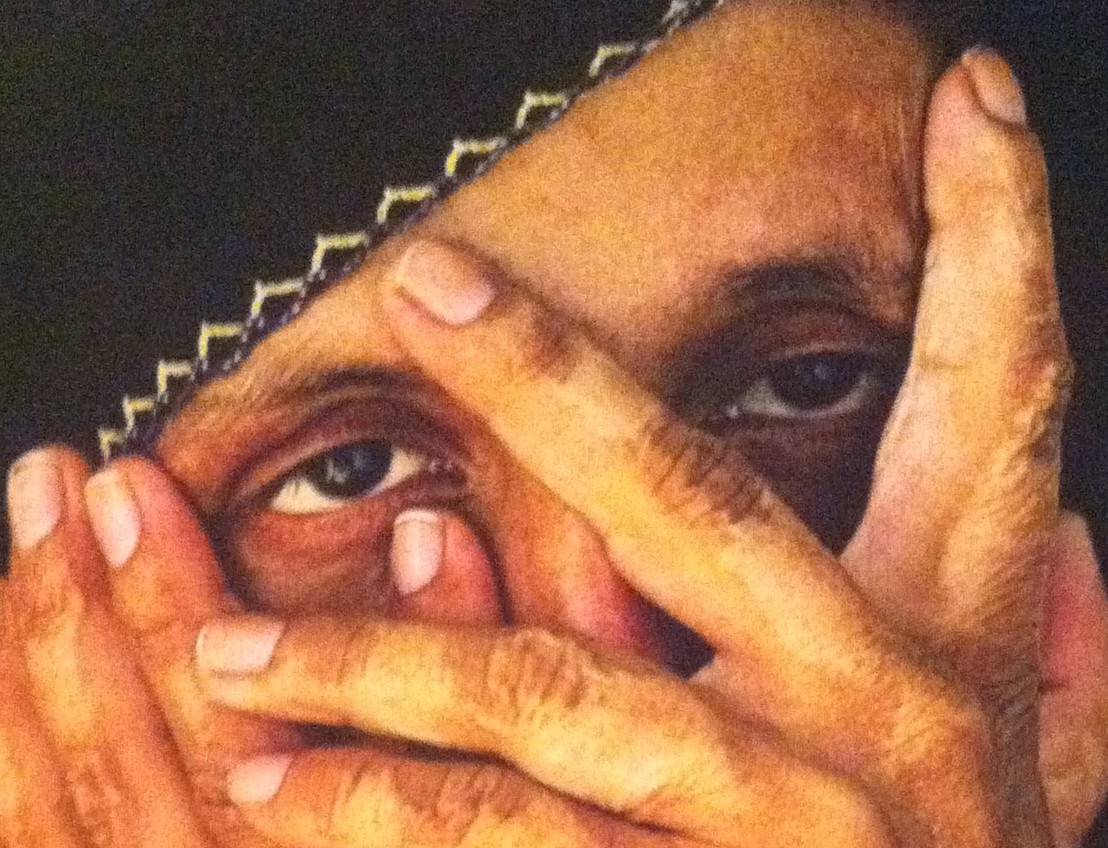
Michelle Yeoh and Luc Besson on The Lady, their film about Burmese Leader, Aung San Suu Kyi

French Director, Luc Bresson, (Le Femme Nikita, Fifth Element) and Actress, Michelle Yeoh, (Crouching Tiger Hidden Dragon), were on hand at New York’s Asia Society to screen their film, The Lady, on Burmese Leader, Aung San Suu Kyi.

The film starts with the assassination of Suu Kyis’ father, Aung San, the Burmese democratic leader who ushered in independence from British rule in 1947, the same year he was killed.  It picks up again after she has moved to Oxford, where she lives with her husband and Burmese scholar, Michael Aris, well played by David Thewlis, and their two children. Kyi returns to Rangoon in the early 90’s to care for her ailing mother and bears witness to the violent student crackdown by the military.  She doesn’t leave, and with almost two decades of house arrest and a Nobel Peace Prize, as the saying goes, the rest is history.

The crux of the film centers on the pull between Suu Kyi’s choice to lead her country over choosing to raise her family in Oxford.  Her choice resulted in her not being with her husband on his death bed from prostate cancer in 1999.  If she left Burma, she would never be allowed to return, and the military junta denied Aris’s visa from London.  Aris forbade her to leave.

Besson does his best to stick to the riveting facts of her story.  A Burmese reporter at the post-screening asked why he only focused on the Hollywood-version of her marriage and not the atrocities still inflicted on the Burmese people by the military junta.  Besson said he couldn’t tell that story because he didn’t know it that well, but wanted to focus on the inner conflict within Suu Kyi, and deal with the love of family and country.  It is an effective strategy, and Suu Kyi is wonderfully played by Yeoh.  She embodies the Burmese leader with steely grace and dignity that has earned Suu Kyi the adoration of the her nation and beyond.

Another Besson strategy that anchors the film is that many of the smaller roles were filled with Burmese non-actors.  Filmed in Thailand, the Thai border has a large Burmese refugee camp and over 200 residents from the camps were used.  Suu Kyi’s housekeeper and menacing military guard that keeps her under house arrest are deeply effective.  Besson said the despotic guard who keeps her confined under house arrest is actually a carpenter by day.  He was quite brilliant.

The story lapses into sentimentality but it does make the viewer, especially this one, to want to learn more about Suu Kyi, the history of Burma, and the current situation.  Not a bad result for a Hollywood film.

The Lady will be released in February, and by all means, rent it, download it, pirate it (if you live in Burma because it is illegal there), just make sure you see it.

Although Hillary Clinton was able to visit Suu Kyi this year, and Suu Kyi’s house arrest has been lifted, Besson and Yeoh are cautiously optimistic about her future.  “Her release from house arrest has happened before, but people are still getting killed at the borders,” he said.

To see the full interview, please visit the Asia Society website.

Can’t see it on Vimeo? Watch it on YouTube.
Undetectable

Undetectable

Directed by Jay Corcoran

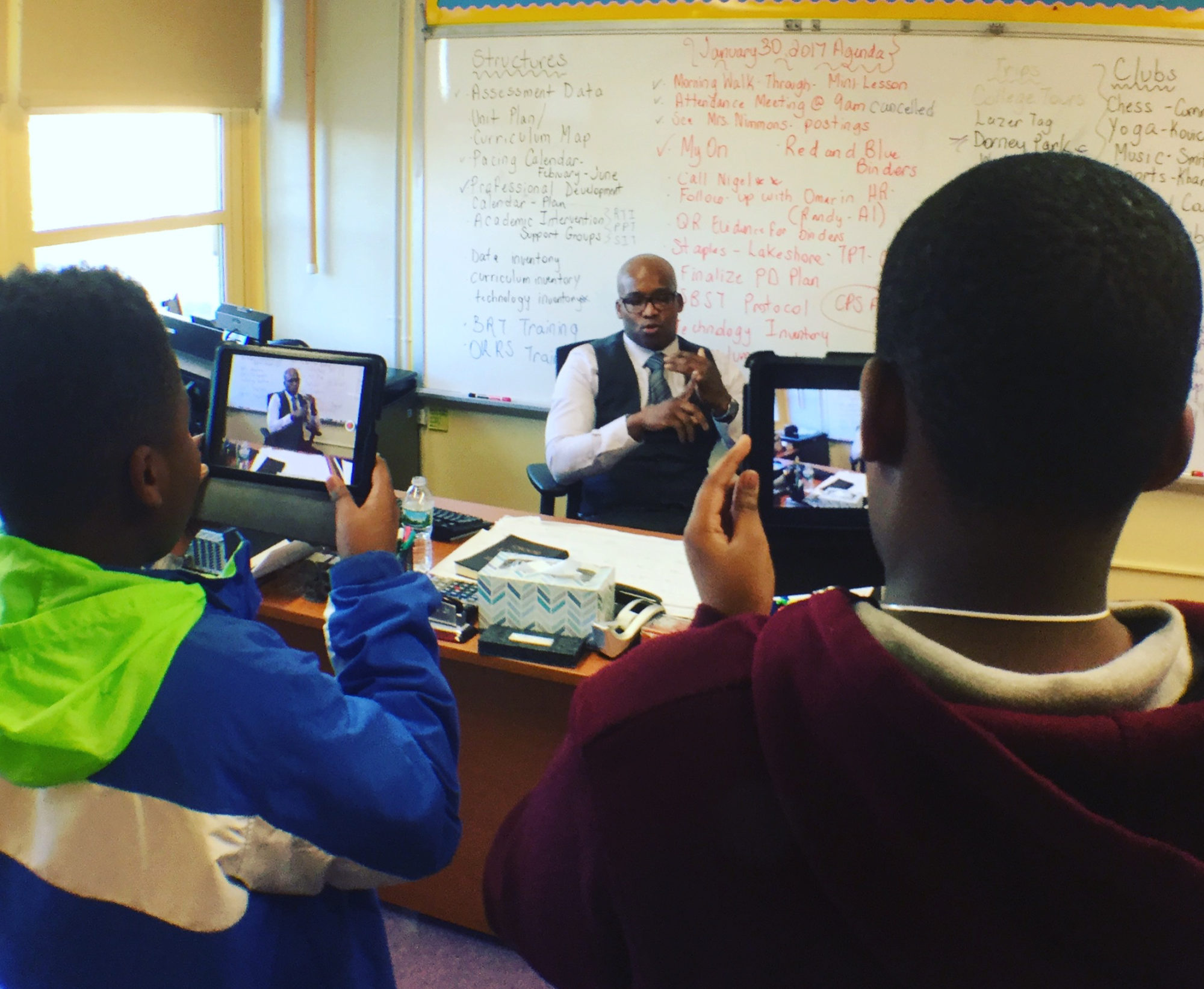
UndetectableUndetectable is a feature documentary, following for three years six Boston residents on the new multi-drug therapies for HIV disease. The film examines the complex physical and psychological effects of the treatment on three women and three men of various ethnic and cultural backgrounds, and the importance of AIDS education and advocacy within both the gay and poor and minority communities. It was broadcast on PBS, Independent Lens.
Undetectable looks to the next stage of the AIDS crisis: how many of those affected deal for the first time with hope, and how the fortunate number who respond to the drugs face both a grueling treatment regimen and the challenge of rebuilding their lives during a reprieve from what was formerly a death sentence. For many there are devastating side effects; a third cope with the desperation and frustration that accompanies the lack of any response.

Above all, the film looks to the changing face of the epidemic, posing difficult questions about the readiness of both the AIDS support community and the unaffected larger world to contend with the changing demographics of the disease. For the first time since the beginning of the U.S. epidemic, the number of new cases among Blacks and Hispanics have surpassed that among Whites. Coinciding with the appearance of the expensive new therapies, this development suggests that the politics of AIDS will be more and more racially and ethnically charged.

REVIEWS

“A pungent social mosaic that in slicing across boundaries of sex, class and ethnicity has moments of heartbreaking intimacy… Besides being a powerful human document, the film is a reminder that AIDS miracle drugs are no quick fix and that the end of the epidemic is not in sight.”
Stephen Holden, New York Times

“Eloquent…gripping.”
Jon Matsumoto, Variety

“So moving and powerful because it reminds us how rarely we look into the human face of AIDS..The strength of the film is its simplicity.”
***1/2
Loren King, Boston Globe

Critic’s Choice
John Leonard, New York Magazine

“Poignant..”
Critic’s Choice, Boston Magazine


Life and Death on the A-List

A-list

Directed by Jay Corcoran

A-listThis striking documentary by New York actor and playwright Jay Corcoran, details the life and death of Tom McBride, a New York actor and model dying of Progressive Multi-focal Leucoencephalopathy (PML), an AIDS-related brain disease.

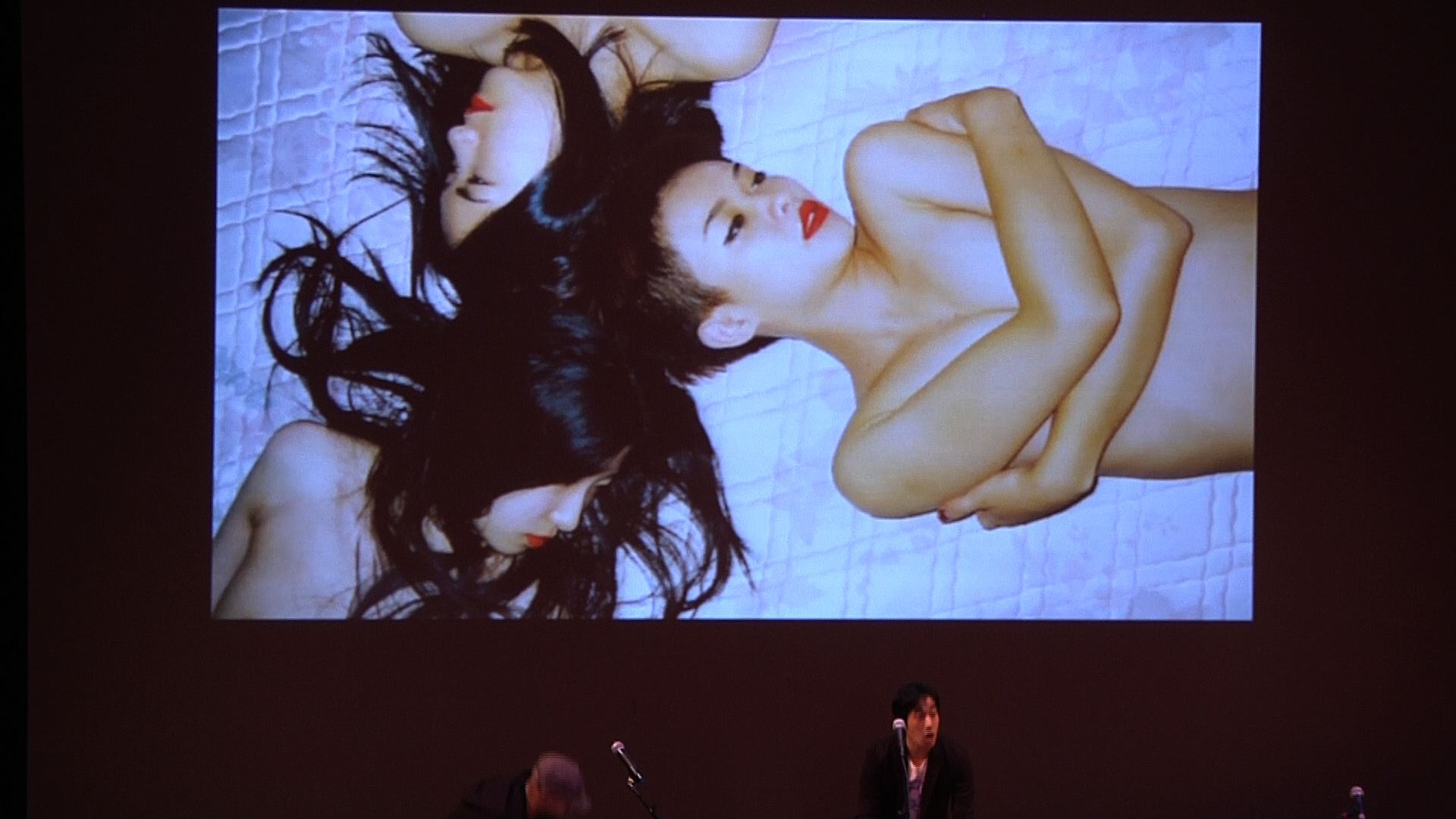
McBride’s “All-American” good looks made him a familiar face in television commercials, print ads and films through the ’70s and ’80s. He even became that most emblematic of masculine images: the Winston man. For many gay men, McBride became an icon exemplifying life on the “A-List” — the whirl of sex, drugs, theme parties, and summers on Fire Island that made New York’s gay scene famous. But McBride’s glamorous life was stalked by his sexual obsession and compulsive drive.

Corcoran’s film takes an unsparing look at one man’s relationship to his beautiful body and how he copes with its disintegration. More profoundly, LIFE AND DEATH ON THE A-LIST is about us: our bodies, our fantasies, our dreams of sexual fulfillment. Tom McBride is a fallible, tragic hero pointing the way to a more humane vision of how we all — gay and straight — might view our lives, bodies, and the endless possibilities of life.

REVIEWS

“This intimate view of an unrepentant sexual adventurer raises tough questions about personal values, vanity and the emphasis on beauty in the fast lane of New York gay life.”
Stephen Holden, New York Times, Critics Choice

“Wrenching, …wryly humorous and unflinching.”
Kevin Thomas, Los Angeles Times, Critics Choice

“Absolutely enthralling.., leaves you breathless at the range and depth with which it tackles the power of the libido, issues of gay self-hatred, and the use of sex to conquer, degrade and compensate for rejection in other areas of life.”
Ernest Hardy, LA Weekly, Critics Choice

“Painfully honest… riveting.”
Matthew Gilbert, Boston Globe, Critics Choice


Shanghai Fashionista Dogs Flaunt Pearls, Matching Shoes and Outer Wear for New Year’s Lantern Festival

Conspicuous consumption is everywhere on the streets of Shanghai, China these days.  From the Prada, Chanel and Tiffany megastores to the ubiquitous Starbucks signs and McDonalds motorcycle deliverymen.

Starbucks, Yuyuan Gardens, Shanghai, China

It is hard to fathom this is the same China we associate with the dire poverty from just a few decades ago.  For sure there are the one percenters v. 99-percenters, and there is rural poverty in Western China, (unfortunately these is plenty of rural poverty in the US) but it seems that for some in the Shanghai middle class, things are better. One tiny example of this upward mobility are the clothes these dog owners buy for their beloved pets.   Continue reading “Shanghai Fashionista Dogs Flaunt Pearls, Matching Shoes and Outer Wear for New Year’s Lantern Festival”

The Shanghai Restoration Project, Zhang Le and NeochaEDGE Wows NYC

The Shanghai Restoration Project had the sold-out audience at New York’s Asia Society shouting for more after their curtain call.  But it was only day two of the Chindia Dialogues, a four-day festival of Chinese and Indian writers, thinkers, artists and performers coming together for the Asian Arts + Ideas Forum, and the staff needed to pace itself.  As the lights went up, the audience buzzed with appreciation, having watched stunning statuesque Shanghai singer, Zhang Le, and New York Hip Hop artist, Jamahl Richardson, riff on traditional Chinese melodies spiced with New York Hip Hop.  The dazzling videos were equally stunning. Continue reading “The Shanghai Restoration Project, Zhang Le and NeochaEDGE Wows NYC”

Wellesley High School Girls Step Up

Out with the old and in with the new, Wellesley High School, in Wellesley, MA will tear down the old school.  No need to worry that education is going down the tubes in this town.  Wellesley will soon have a state-of-the-art high school right next door.  But before the February demolition, beloved former English teacher, Jeanie Goddard, and community member, Gig Babson, organized a spectacular celebration, Turn Out The Lights, to mark the historic transition.

Wellesley High School, Wellesley MA

Continue reading “Wellesley High School Girls Step Up”

Nucleo Corona: Youth Orchestra and Chorus For Social Change

The Louis Armstrong Recreation Center in Queens, New York was brimming with kids lugging cellos and other musical instruments twice their size. But the kids weren’t complaining. In fact it was quite the opposite, the kids were racing ahead of their parents to get to work. They were performing at the Museo del Barrio the next day and had less than two hours to rehearse.

It is understandable to see kids get excited on the playing field, but in a rehearsal hall to practice violin and french horn?  What is the secret?

Continue reading “Nucleo Corona: Youth Orchestra and Chorus For Social Change”

NYT’s Tom Friedman Recommends Steve Jobs’ 2005 Stanford Commencement Speech

New York Times Columnist, Tom Friedman recently delivered the keynote address at the Special Libraries Association Conference in Philadelphia.
The conference focuses on how libraries, governments, companies and individuals use new technologies to gather and disseminate information.
Friedman recommends Steve Jobs’ 2005 Stanford Commencement address as required viewing.  He says the video is one of the best examples of how to approach the process of an innovative life.
Job’s encourages the students to find their passion, but where he diverges from the standard graduation commencement platitudes is when he tells the students to not waste time, they will not be young forever and they will die.  Quite refreshing in this death phobic society, but there is a lot more in Jobs’ speech and notes from Friedman’s recent talk.